Memorizing the Holy Quran (Hifz) is often viewed as a monumental, almost unattainable goal reserved for scholars or young prodigies studying in traditional seminaries. However, with the rise of structured online learning, achieving this noble status is more accessible than ever, provided you have the right methodology.
At Shia Quran Academy, we have guided numerous students—from busy professionals to committed youth—through their Hifz journey entirely online. Here is our structured approach to succeeding in online Quran memorization.
The Reward of Hafiz-e-Quran
"The number of levels in Paradise is equal to the number of verses in the Qur'an. Therefore, when a reciter of the Qur'an enters Paradise, he will be told: 'Read and ascend', and there will be no level higher than his."
- Imam Jafar as-Sadiq (AS)
The spiritual elevation of committing the words of Allah (SWT) to heart cannot be overstated. It embeds the divine guidelines directly into your consciousness, acting as a shield and a guide in your daily life.
1. Tajweed Must Come First
A common, and often disastrous, mistake is attempting to memorize the Quran before perfecting one's recitation. If you memorize a Surah with incorrect pronunciation, you embed that mistake deep into your memory. Unlearning a mispronounced verse takes significantly more effort than learning it correctly the first time.
Before beginning a dedicated Hifz Course, ensure you have completed a Tajweed Course to master your Makharij (articulation points) and Sifat.
2. The Essential Hifz Routine: Sabaq, Sabqi, and Manzil
Traditional memorization relies on three pillars which we seamlessly adapt to our online teaching:
- Sabaq (New Lesson): The new verses you memorize today. This should be a manageable chunk—perhaps just 3-5 lines for beginners. Quality always trumps quantity.
- Sabqi (Recent Revision): The verses you have memorized over the last 10 to 14 days. These are the most volatile in your memory and must be revised daily so they cement from short-term to long-term memory.
- Manzil (Old Revision): Returning to sections you memorized months ago. If you memorize a new Juz but forget the previous ones, you haven't truly progressed. Our teachers systematically test your Manzil during online sessions.
3. Utilizing Digital Tools Effectively
Online Hifz leverages modern tools for ancient learning. We recommend:
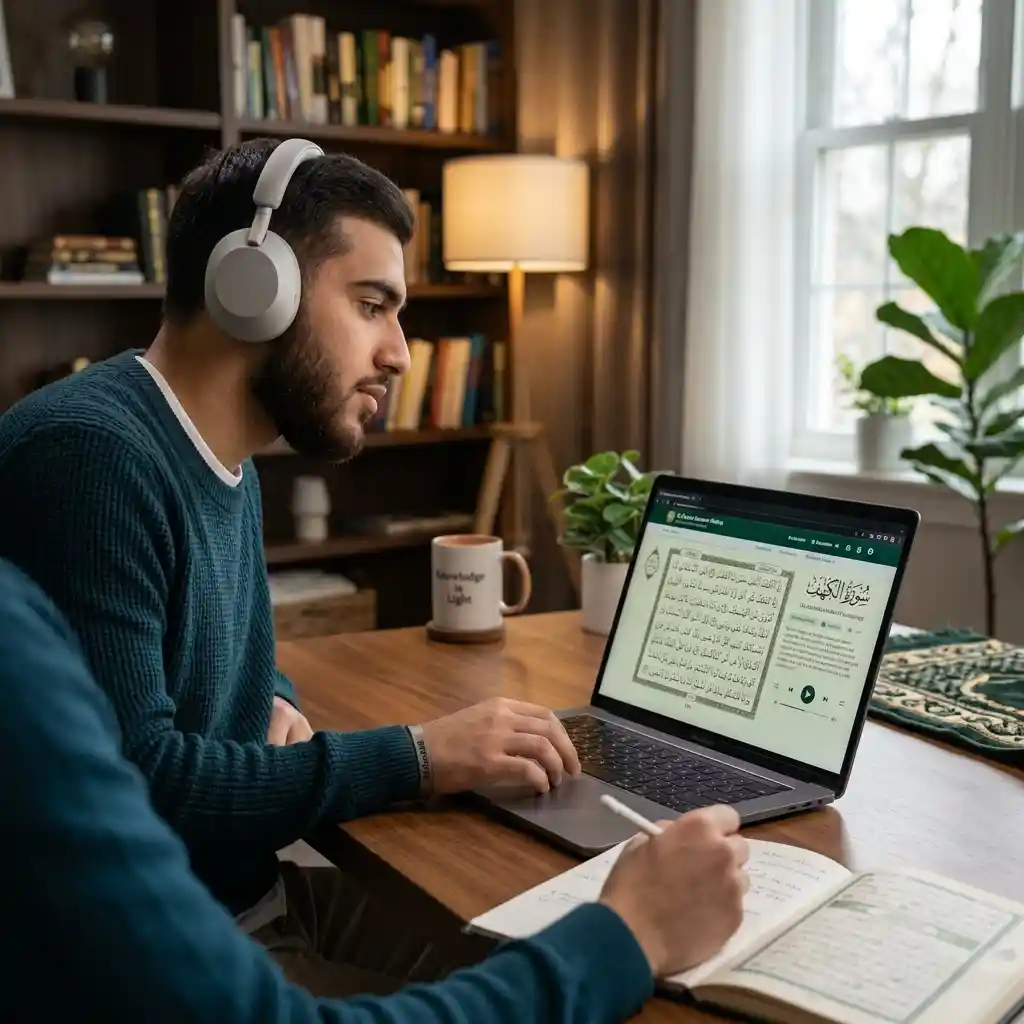
- Sticking to one Mushaf: Use the exact same physical copy or highly specific tablet app every single day. Photographic memory plays a huge role in Hifz; you need to remember *where* a verse physically sits on the page.
- Audio Repetition: Use digital tools to loop a specific ayah recited by famous Qaris (like Khalil Al-Hussary) to let the precise rhythm and pronunciation wash over you before you even try to memorize it.
- Recording Yourself: One of the easiest online assignments we use is having students record their revision and send it via WhatsApp to their teacher outside of class hours.
4. The Necessity of an Accountability Partner (Your Teacher)
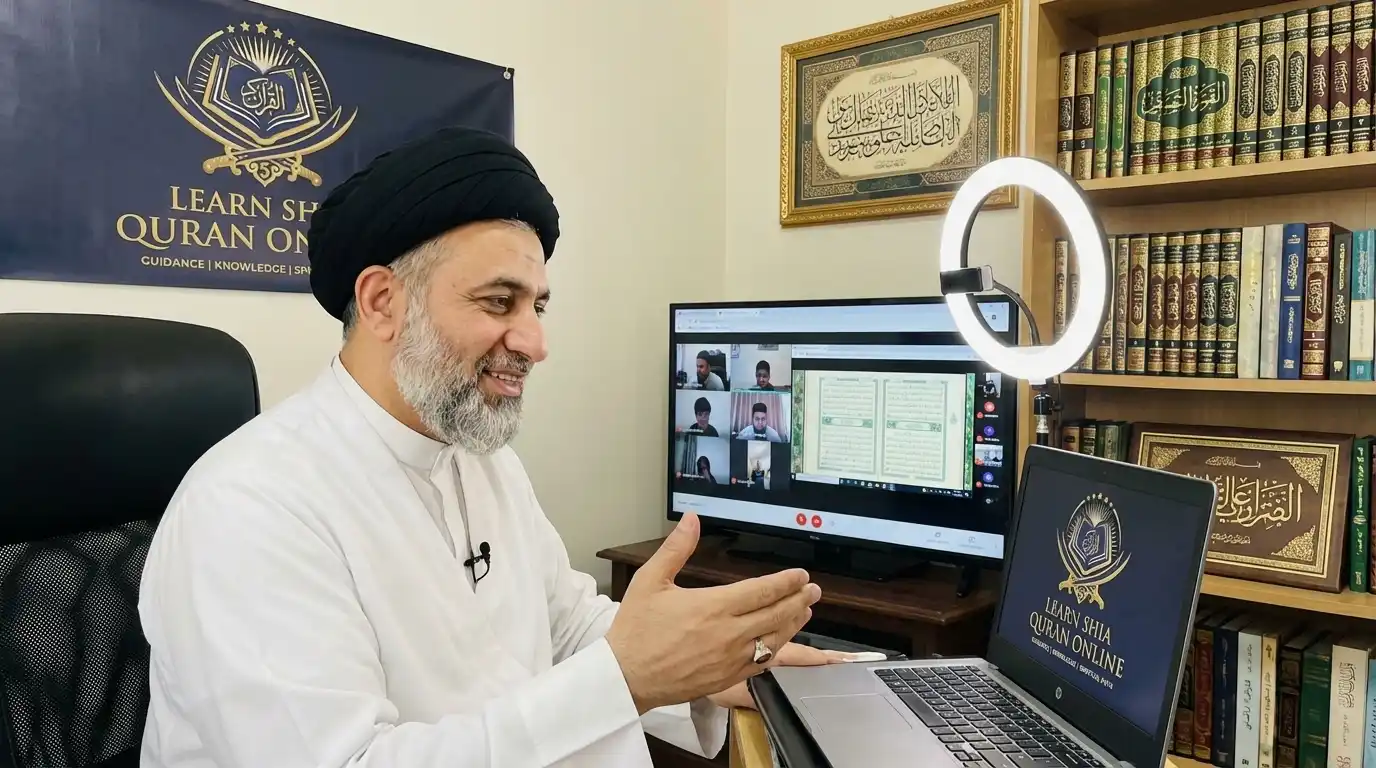
It is nearly impossible to memorize the entire Quran alone. Motivation waxes and wanes. You need a highly disciplined teacher waiting for you on Zoom or Skype to ensure you don't skip your Sabqi. Our professional Shia tutors act as both instructors and crucial accountability partners, gently but firmly guiding you forward.
If you are ready to embark on this life-changing journey, reserve your free trial class today and discuss a personalized Hifz schedule with our academic advisors.